
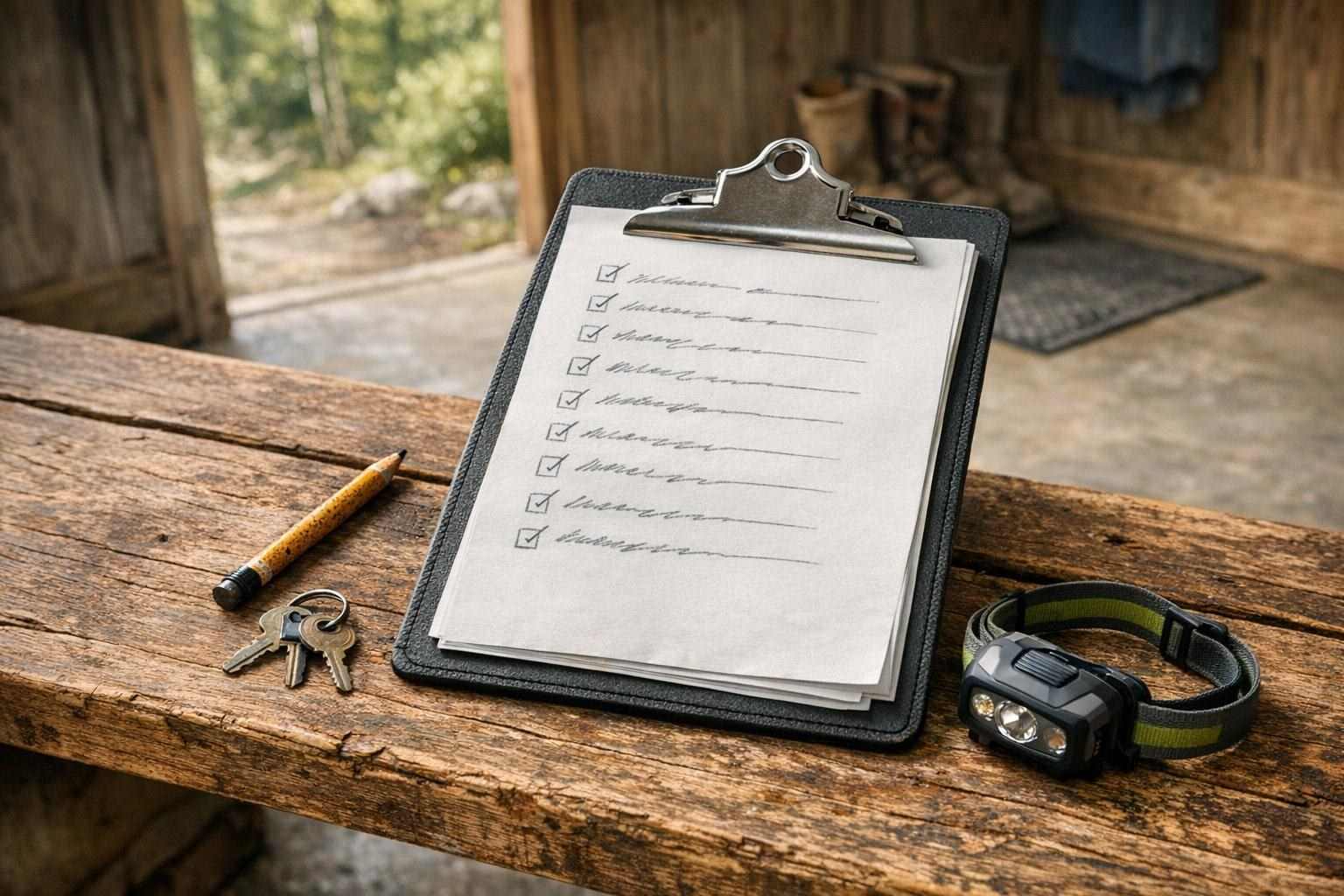
The impression must be given that guests know what to do, but it must be organized in great detail, so that everyone knows what they have to bring and what their jobs and responsibilities are. First, one must organize the essential items that have to be ready for the guests' arrival. In the hours following their arrival, the guests must be able to deposit their bags, find their sleeping places, and have access to the facilities (water, toilet, kitchen), a handwashing station, and be able to find the heating.
Understand the Initial Needs of Your Camp
In anticipating the first hours of your guests' arrival and the organization of their immediate needs, giving consideration to their gear in initial approaching stages of camp will enable hosts and their guests to make the best of the immediate spaces in which guests will find themselves upon arrival. Assess early in the process, for example, where in the camp's immediate approaches guests will put their baggage. Determine which sleeping quarters are ready to receive guests and where in the camp they can find facilities for hand washing as well as for approaching the kitchen to prepare meals.
This means that you should note the things you need to organize for your camp guests in the order in which they will be needed. Guests will arrive after dark, therefore make sure the entrance, paths and steps to the areas where they will be sleeping are visible. Be sure to have adequate lighting, heating and facilities for water, toilet and handwashing, as well as any emergency switch-off points. Although a well-organized camp is key to a quality experience, an inconveniently organized camp with supplies scattered about and nowhere to store guests' perishable items is still going to be incredibly frustrating.
Break Down Chores by Timing
Jobs can be assigned to be completed before you leave, upon arrival, and then during your stay. The specific tasks and timing can vary depending on the camp location, the weather forecast, and your travel plans. But by organizing your task list in this way, the more critical tasks are brought to the forefront.
* Before Departure: Sleeping positions, Food assignments, Fuel & power, Water supply, Waste disposal, Repairs & servicing of equipment.
* On Arrival: Open up the camp, look for any immediate dangers and get beds set up. Store the more perishable supplies in good places, make a clear area for cooking and cleaning and assign people to supervise these spaces as people arrive.
* During the Stay: Share duties of cleaning up after meals, disposing of waste and of looking after the camp's common rooms. It is better to divide up and assign duties that the hosts can then leave to their guests.
Make sure you list out the tasks in detail so that each guest knows what they are supposed to be doing. This means instead of listing late 'check water' you would list 'Fill marked drinking-water containers and check the supply tap for operation'. The goal of each task should be clear to each guest.
Efficient Job Assignments
People need to be assigned jobs based on the amount of time they can commit to, plus the relevant skills that they possess and how familiar they are with the camp. So, one person could organize the food, sort out sleeping areas, while another could sort out the entrance and the outdoor spaces to the camp. The person tasked with food storage and preparation for meals would also be in charge of storing and preparing other food that guests bring to camp.
Identify a last check in person and list all the tasks that have been assigned to guests. Also list out all the dependencies for the supplies that will be shared by guests such as cooking utensils, hot water etc.
Similarly, guests arriving at the camp should be given a handy reference detailing their personal roles as well as their shared camp roles, including how to get to and around the site, a list of bedding and clothing required, any known food allergies, and the rules governing shared equipment. This will help combat the mistaken assumption that there are endless quantities of all supplies.
Create a Practical Arrival Checklist
When making your arrival checklist, remember to keep it short and simple enough to write with cold and tired hands. List the most important things to check first.
1. Get the main entrance & paths unlocked and checked for safety before you head in.
2. Check for locations for lights, heating, water, toilets and emergency stops.
3. Set up specific sleeping places with gear for wet/mudy clothing.
4. Store all food supplies and clearly distinguish between hosts' supplies and guests'.
5. Confirmation of next days departure time & transport.
A note on Quiet Hours and restricted areas of the camp.
Safety should never be an afterthought. Make sure guests know how to safely handle fire, fuel, firearms and treat injuries and illnesses. Look up the local laws and customs and include them in your safety instructions instead of relying on past practice.
Optimize Shared Supplies with Practicality in Mind
Avoid accumulating a large collection of containers and duplicate supplies. Concentrate on developing an efficient camp organization that will facilitate access to the storage of shared supplies and personal items, which should be clearly labeled and placed in a designated area of the camp.
Packing needs to be considered when deciding where to store supplies. The storage area should be easy to organize and have clear labeling of containers. It is also good to keep essential supplies in easy to reach locations such as within arms reach on a shelf. These supplies should be for practical needs such as a repair kit, spare batteries, gloves, bags for rubbish, cleaning supplies and other general supplies that can be useful in the camp.
Should you go with a single communal menu for the group or have each person bring a number of meals for themselves? Both ways have their advantages and disadvantages. Planning all of the meals for the group would make shopping for groceries and cleaning up after meals a lot easier. However, assigning specific meals for each guest would allow for a greater variety of foods to be brought and would distribute the work load better.
Plan for Departure: The Reset Process
Even if the first night runs well, the following morning can easily become a chaotic mad-dash to get people to leave on time. This is especially true if a lot of things need to be checked before people can leave. Plan out departure tasks ahead of time and make sure that everyone knows who is going to check for example if everyone's sleeping area has been left in good order. Have them check the food and rubbish too as well as cleaning the surfaces of any communal items and turning off utilities and checking that all doors and windows are locked.
Leave a reset note in the main area of camp, such as where you first arrive, with details on where lost items were left, where soiled linens will be put, and any remaining tasks that each guest needs to complete before they leave camp for good. It's also good to include a photo of particularly complex spaces or where supplies are typically stored, but make sure to verify the details before you leave.
After the camp has finished, review the list of tasks that were not clear, not necessary or were executed at the wrong time. Modify your planning documentation as you see fit (i.e. make more concise, add in more detail as required, etc.). Remember these are living documents and are meant to be used by subsequent groups of people. Don't feel the need to give them a detailed briefing before sending them off.

